







Elgin sits along the Fox River about forty miles northwest of Chicago, close enough for a day away from the city and distinct enough to feel like its own place. The river is the reason the town grew, and it is still the reason to linger. A paved trail follows the water for miles, past herons, park lawns, and the brick warehouses that once kept time with Elgin’s watch factories. Walk it, bike it, or put in a kayak and let the current set the pace.
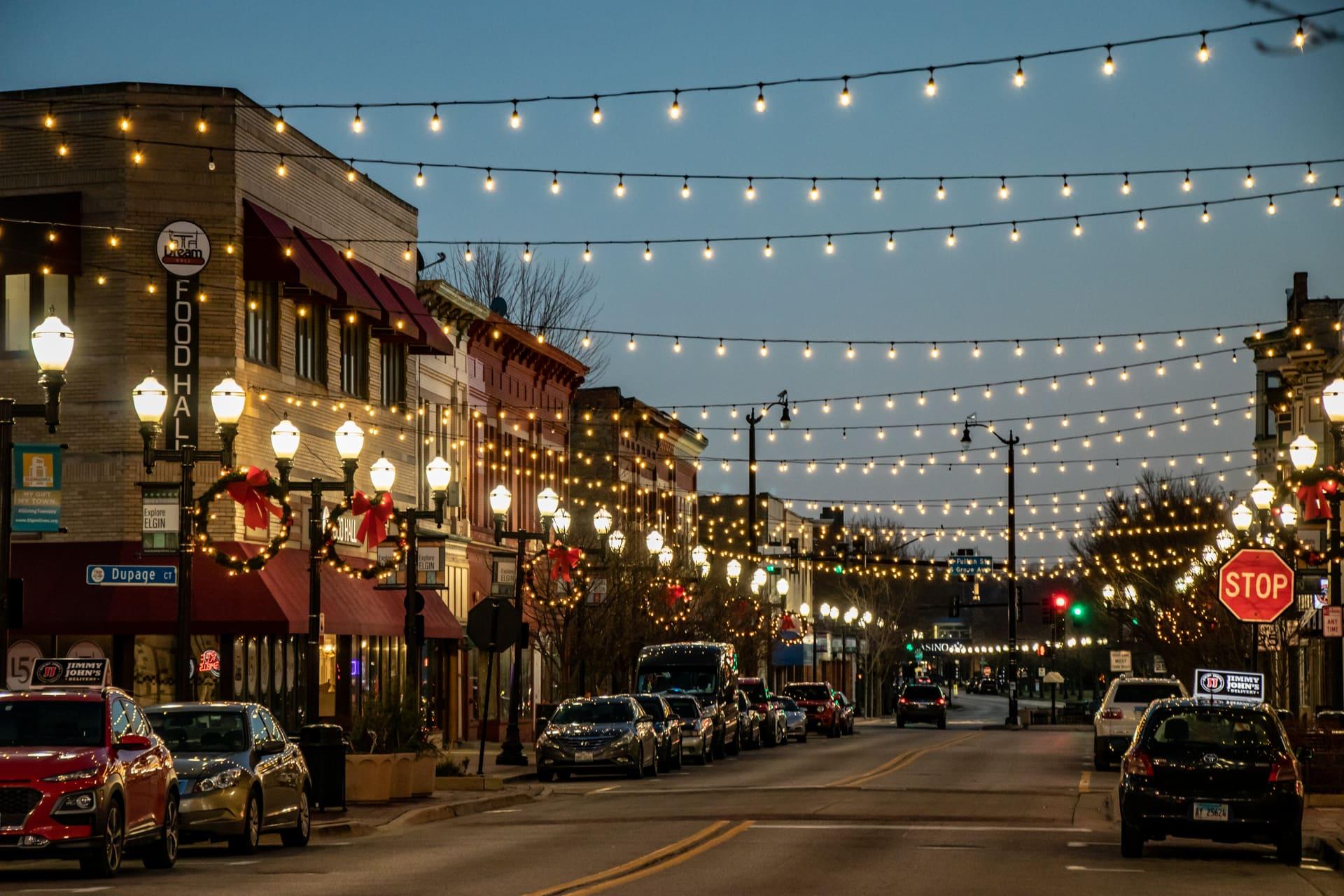
Downtown is built for that kind of wandering. Historic storefronts line a compact grid of shops, cafes, and restaurants, with public art and the riverwalk tying the blocks together. The Hemmens Cultural Center, on the bank of the Fox, is the civic living room: symphony concerts, theater, and a gallery of work collected from local festivals. On summer Fridays the Downtown Elgin Market takes over South Riverside Drive with produce, makers, food, and live music. Festival Park’s splash pad is the easy exit when the afternoon gets hot.
The food follows the same mix of old industry and new kitchens. Grand Victoria Casino, the paddlewheel on the river, still draws a dinner crowd for a night out. Around the square and along the trail, the range runs from diners to farm-to-table rooms, the kind of list that makes a weekend feel longer than it is. Elgin’s watchmaking years left a museum’s worth of stories at the Elgin History Museum, and the Fox River Trolley Museum, just south of town, still rolls a vintage car along the river for anyone who wants the slower version of the commute.
The Explore Elgin Area reaches past the city limits into the surrounding Fox Valley. Lords Park and the municipal golf courses cover the everyday outdoors. In winter, Villa Olivia’s slopes and Santa’s Village turn the season into a family outing. In fall, nearby farm stands and pumpkin patches, including Goebbert’s, pull the same visitors who spent June at the farmers market. Architecture walks through the older neighborhoods show what a watch-company town built when it had money and ambition: commercial blocks downtown and houses that still reward a slow drive.
The city’s industrial chapter is specific, not generic. The Elgin National Watch Company once employed thousands and shipped watches across the country, and the Elgin History Museum keeps that story in one building, from pioneer years through the factory floor. Self-guided architecture tours pick up the same thread outside, moving from commercial blocks downtown into residential streets where the watch money built houses that still hold their lines. It is an easy way to understand why the riverfront looks the way it does.
Plan the day around the water and one sit-down meal. Morning on the Fox River Trail, lunch downtown, then either the Hemmens if there is a performance or the trolley museum if you want the river from a rail car. Grand Victoria is the evening option when the group wants a longer night. In warm months, time the visit for a Friday market. In cold months, trade the splash pad for Villa Olivia and the holiday lights that take over downtown. Either way, Elgin does not need a long itinerary. It needs a pair of shoes and an appetite.
None of it asks you to rush. Park once, eat twice, and use the river as the map. Elgin is a city of choice for people who live here, and it works the same way for a guest: a trail, a table, a show, and a downtown that still feels like a downtown.